


Gum disease and heart health

Gum disease doesn’t just threaten your smile, it can also impact your heart. As research continues to uncover the deep connection between oral health and overall wellness, one thing has become clear: inflammation in the mouth can trigger inflammation throughout the body.
At Star Dental, we see firsthand how gum health reflects systemic health. About two-thirds of adults over 65 show signs of periodontal disease, which begins quietly as plaque around the teeth. Over time, that sticky bacterial film hardens into tartar, irritating the gums and causing them to bleed or recede. If ignored, the infection can destroy the bone that supports your teeth, leading to tooth loss and more serious health complications.
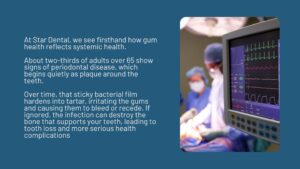
People with gum disease are nearly twice as likely to experience a heart attack compared to those with healthy gums. While smoking, diet, and overall health habits play a role, there’s growing evidence that bacteria and inflammation directly link the two conditions. When gum tissue becomes inflamed, bacteria can enter the bloodstream and travel to the arteries, where they’ve been found in the very plaque that causes heart attacks and strokes.
Your mouth is an entry point to the rest of your body, so what happens there matters everywhere else. The immune system reacts to these invading bacteria with inflammation — a process meant to heal but which, when chronic, can cause damage inside blood vessels. Over time, this inflammatory response contributes to the buildup of fatty deposits that block blood flow, increasing the risk of cardiovascular events.
Common signs of gum disease include red, swollen, or tender gums, bleeding during brushing, bad breath, and gums pulling away from the teeth. You might also notice teeth shifting slightly or dental appliances fitting differently. These symptoms are warning signs your gums need attention.
Treating gum disease starts with removing the infection and controlling inflammation. Deep cleanings, known as scaling and root planing, clear out tartar above and below the gumline to allow healing. Maintaining gum health afterward depends on consistent home care: brushing twice daily, flossing once a day, and keeping up with regular dental visits.
Prevention is the best medicine. Daily brushing and flossing can reverse early gum inflammation before it becomes destructive. It’s normal for gums to bleed slightly when you first get back into the habit, but that’s temporary consistency brings healing.
Your diet plays a significant role as well. Sugary foods and drinks feed harmful bacteria in the mouth and promote inflammation in the body. Swapping soda and processed snacks for water, fruits, and vegetables helps protect both your gums and your heart.

At Star Dental, we emphasize that oral health isn’t separate from your general health — it’s an essential part of it. Protecting your gums helps protect your heart. A healthy smile can truly mean a healthier life.
